
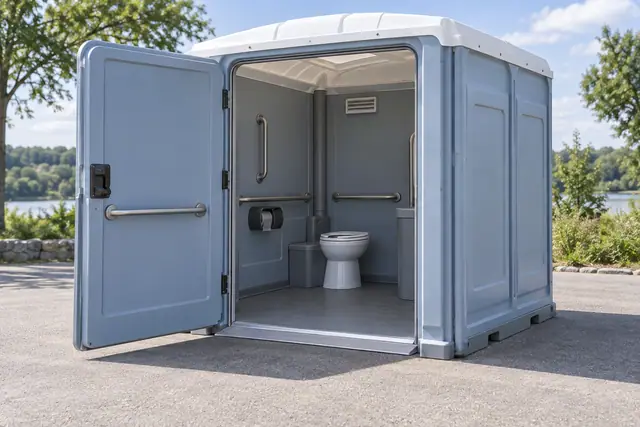
Ask about the whole use sequence
A request may involve independent use, assistance from a companion or a particular way of operating doors and controls. Those practical differences matter more than selecting the largest-looking cabin. Explain the functions needed without sharing private medical details.
Review approach, entry, turning, door operation and the space needed by the intended user or accompanying person. Request the offered model details rather than rely on a catalogue symbol or the term accessible.
A larger footprint may help with one movement and leave another unresolved. If the specification does not answer the requirement, keep that question open and seek a supported alternative before accepting the model.
Include the washing point and finished surroundings
Review the route and operating features of washing as well as the toilet. Tables, barriers and waiting people can alter the usable space after equipment is delivered, so evaluate the finished activity layout.
The controller must permit the position and the provider must be able to deliver and maintain it. Confirm ground, doors, approach and any model support; the equipment label does not certify the complete site.
Keep assistance needs visible in the service plan
Identify a contact who can report a blocked route or function that is not working for the users. Discuss changes through the provider instead of improvising ramps, handling equipment or altering the model.
Confirm cleaning, waste, paper and washing supplies, plus delivery, occupied duration and collection. Ask how the arrangement will remain usable during care visits rather than treating access as a delivery-day check only.
Questions before you book
Is an accessible cabin a guarantee for every user?
Compare the actual features and surrounding route with the relevant practical needs.
Should washing be reviewed separately?
Yes. Its approach, controls and supplies must work for the people using it.